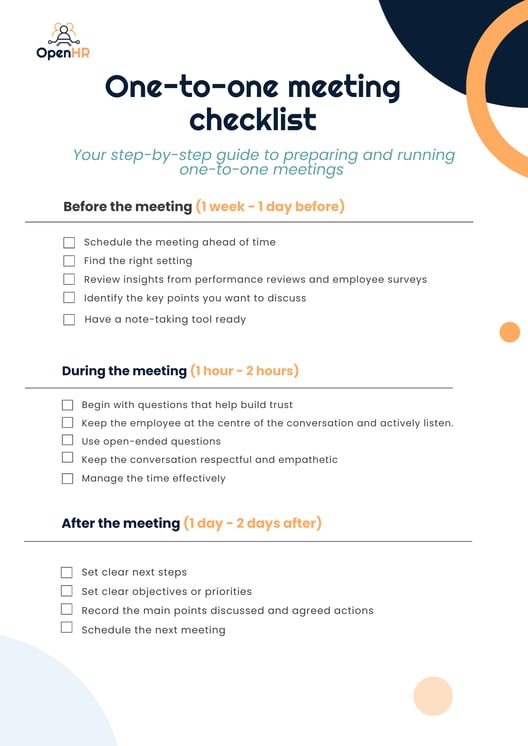
According to the Total Value Index report, 64% of organisations struggle to resolve problems quickly. On top of that, 59% of organisations said that there are no effective communication channels in place.
Why does this happen?
Well, many organisations underestimate the broader value of one-to-one meetings, and the impact they can have on communication, alignment, and productivity.
When used properly, a well-structured 1:1 meeting can break down barriers between managers and employees, surface issues early, and create space for meaningful conversations about performance, wellbeing, projects, and priorities.
This guide walks you through what a 1-to-1 meeting actually is, how to approach it effectively, and the benefits it can bring to your organisation. We’ll also share some practical examples of questions you can ask to make these meetings more valuable for everyone involved.
What is a one-to-one meeting?
A one-to-one meeting is a regular conversation between a manager and an employee where both parties have the opportunity to discuss priorities, goals, and challenges openly.
At its core, the meeting should focus on the employee (while also providing space for the manager to align on objectives, expectations, and progress).
Done well, these meetings help prevent internal issues from escalating and reduce friction throughout the employee lifecycle. Small concerns that might otherwise go unnoticed can be surfaced early, discussed constructively, and resolved before they become bigger problems.
But, how often should they happen?
It’s a good idea to schedule a 1-to-1 at least every two weeks. And while the format may vary depending on the purpose of the conversation, most organisations find that keeping the meeting to around an hour or less helps maintain focus and productivity.
Of course, it will always depend on the type of meeting you’ve agreed on and the needs of your team and projects.
Types of 1:1 meetings
Not all one-to-one meetings serve the same purpose. Organisations tend to use them in three main ways, depending on the situation and the objective of the conversation.
Understanding these differences can help managers run more focused discussions and ensure the meeting actually delivers value, rather than becoming just another invite in your calendar.
One-to-One check-in meetings
Check-in meetings are designed to understand whether the team is progressing as expected with their projects and responsibilities.
It gives managers a great opportunity to ask simple but important questions: Are deadlines on track? Is anything slowing progress down? Are there obstacles getting in the way?
These regular conversations help surface potential blockers early. Instead of discovering issues when a deadline is already looming, managers can step in sooner, remove barriers, and keep projects moving forward.
One-to-One meetings to address issues
Sometimes a one-to-one meeting is needed to discuss a specific issue involving an employee.
The goal here is to talk through the situation constructively, understand what’s really happening, and work together on a solution.
That said, these meetings shouldn’t always be associated with problems. If they are only used when something has gone wrong, employees may start to view them negatively (which defeats the purpose of open communication).
One-to-One meetings for new projects
There’s a common misconception that one-to-one meetings only happen when something isn’t working. In reality, they can also be a great space for forward-looking conversations.
Managers and employees can use these meetings to discuss new initiatives, career opportunities, or upcoming responsibilities.
A promotion, for example, is a perfect topic for a 1:1 conversation. It creates space to talk about expectations, development goals, and how the employee can succeed in their new role.

The benefits of one-to-one meetings
Many of the improvements organisations want to see, such as better engagement, stronger communication, and smoother collaboration, often come down to something surprisingly simple: regular, meaningful conversations.
When one-to-one meetings are properly integrated into day-to-day management, they can deliver several key benefits for employees and managers:
🟠 A more productive team. Regular check-ins help identify obstacles quickly, keeping work on track and reducing delays.
🟠 More empathy within the team. These conversations create space for managers to understand employees as individuals, not just as job titles.
🟠 Better visibility of day-to-day challenges. Managers gain insight into the issues employees face in their daily work — from workload concerns to process bottlenecks.
🟠 Stronger communication across the team. Regular dialogue builds trust and makes it easier for employees to speak openly.
🟠 Improved performance and a healthier work environment. When expectations, feedback, and support are clear, both performance and workplace culture tend to improve.
In short, 1:1 meetings are not just a management ritual — they’re a powerful tool for building alignment, trust and long-term team performance.
How to prepare for a one-to-one meeting
Many managers who initially resist one-to-one meetings eventually realise how valuable they are. Why can that happen in the first place? Often it’s simply because they’re not sure how to run them effectively.
When done well, these meetings become one of the most useful tools a manager has. It helps them build trust, address issues early and keep employees aligned with business goals and priorities.
So how do you prepare for a 1-to-1 that actually delivers value? Here are several practical approaches that can make the conversation more productive for everyone involved.
Create the right environment
1:1 meetings should always take place in an environment built on trust and confidentiality.
That means choosing a space where employees feel comfortable speaking openly — whether that’s a quiet meeting room or a private video call for remote teams. The key is ensuring the conversation remains respectful, safe and focused on constructive dialogue.
Put the employee at the centre of the conversation
A common mistake is turning the meeting into a manager-led status update. In reality, the employee should be doing most of the talking.
A useful rule of thumb? Spend the majority of the meeting listening, with the manager guiding the discussion where needed.
After all, these conversations only deliver real value if they provide insights, support and direction that genuinely benefit the employee.
Keep meetings focused and manageable
One-to-one meetings don’t need to take over the diary. In most cases, 30–60 minutes is more than enough.
Some teams prefer weekly meetings, while others schedule them every two weeks. The right cadence will depend on your organisation’s workflow, the employee’s role and the manager’s availability.
The key is consistency, not duration.
Always approach the conversation with respect
Respect and empathy should underpin every one-to-one meeting.
Employees need to feel they can speak honestly about challenges, concerns or ideas without worrying about negative consequences. When managers actively listen and respond with empathy, these conversations become far more productive.
Come prepared with the right information
Walking into a one-to-one without context can turn the meeting into guesswork.
Fortunately, modern HR technology makes preparation much easier.
Performance management tools, employee surveys and HR analytics can provide valuable insights into employee engagement, progress and potential challenges.
Having this data to hand helps managers ask better questions and make more objective decisions.
Schedule regular check-ins
Consistency matters. Many organisations find that weekly or fortnightly meetings work well.
Regular conversations allow managers to stay close to what’s happening within the team, whether that’s project progress, workload concerns or emerging issues that could affect performance.
Use a tool to capture notes
Finally, don’t rely on memory alone.
Managers should have a clear system for capturing notes during the meeting. Documenting key discussion points, agreed actions and next steps ensures that both parties leave the meeting with clarity about what happens next.
This is where integrated HR systems can be particularly useful — keeping feedback, objectives and development discussions all in one place.
One-to-one meetings: what to avoid
1:1 meetings are one of the largest financial commitments your organisation makes every month. If any of those go sideways, you can be in big, big trouble.
After all, meetings can be incredibly valuable. But, there are a few common pitfalls managers should try to avoid.
🟠 Only talking about work tasks. The conversation should feel natural and balanced. Alongside project updates, there should be room to discuss development, wellbeing and anything that might affect productivity.
🟠 Cancelling meetings too often. Skipping or repeatedly rescheduling 1:1 could send the wrong message to your team. Employees may start to feel they’re not a priority.
It’s best to schedule meetings in advance and agree on a time and place that works for both the manager and the employee.
🟠 Wasting the available time. Even if a meeting can last up to an hour, it should still be focused and purposeful. The goal is to identify solutions and move things forward — not just fill the calendar.
🟠 Ending the meeting without clear next steps. Every one-to-one should conclude with some sort of action plan. Whether that’s tackling a challenge, progressing stalled projects or setting development goals, both parties should leave knowing what happens next.
Questions you can ask in a one-to-one meeting
If you’re not sure how to guide the conversation, asking the right questions can make all the difference. Here are some examples managers can use to structure their discussions.
Break the ice
Starting with simple, informal questions helps create a relaxed and open atmosphere.
How are you doing today?
How has your week been so far?
How did you find your recent holiday or time off?
How has your week been so far?
How did you find your recent holiday or time off?
Understand motivation
These questions help managers gauge engagement and alignment with current projects.
Are you working on the type of project you were hoping for?
How are things going with the team?
Are you enjoying this project? Why or why not?
What would you most like to achieve during your time at the company?
How are things going with the team?
Are you enjoying this project? Why or why not?
What would you most like to achieve during your time at the company?
Giving and receiving feedback
1:1 meeting should always allow space for two-way feedback.
What support would you like from me as your manager?
Is anything currently preventing you from achieving your project goals?
Which areas of your work would you most like to improve?
Does my management style help you be more productive?
Is anything currently preventing you from achieving your project goals?
Which areas of your work would you most like to improve?
Does my management style help you be more productive?